Emoji editor
Search collections
Find keyword pages like heart, camera, fire, or kaomoji.
Cute Symbols Emojis
cute symbols
Heart Emojis
heart copy and paste
Heart Sign Emoticon Emojis
heart sign emoticon
Emoji Combo Emojis
emoji combos
Cute Emojis
cute emojis
Pointy Emoji
pointy emoji
Emoji Kissy
emoji kissy
Eyeball Emoji
eyeball emoji
Smiling Emoji
smiling emoji
Freaky Emojis
freaky emoji
Think Emoji
think emoji
67 Emojis
67 emoji
American Flag Emoji
american flag emoji
Heartbreak Emoji
heartbreak emoji
Samsung Emojis
samsung emojis
Eye Emojis
eye emoji
Camera with Emoji
camera with emoji
Emoji Hearts In Eyes
emoji hearts in eyes
Emoji Laughing Emoji
emoji laughing emoji
Heart Emoji Pink
heart emoji pink
Scary Emojis
scariest emoji
Shades Emoji
shades emoji
Blush Emojis
blush emoji
Cool Emojis
cool emoji
Trending pages
Jump into full keyword collections
EmojiDB: Emoji Database, Meanings & Copy-Paste Search
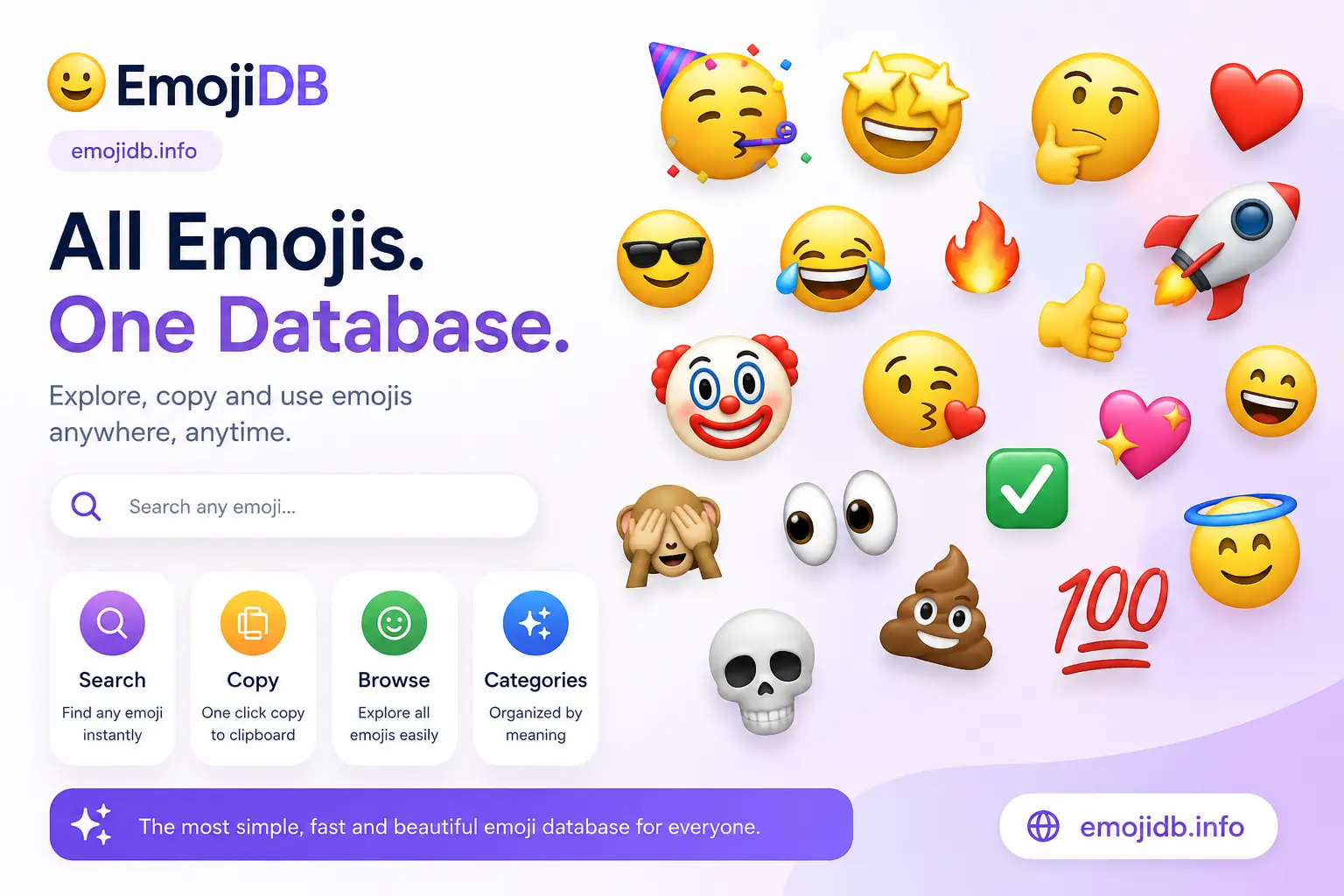
EmojiDB helps you search emoji, kaomoji, and text symbols by name, mood, or theme — then tap any result to copy it. Below, you'll find a plain-language guide to how this database works, what emoji actually mean, and why they don't always look the same on every device. Prefer browsing keyword collections? Open all pages or jump into copy-paste emojis.
What Is an Emoji Database, and How Does Search Work Here
EmojiDB is a searchable emoji database — an index that connects words to matching emoji, symbols, and text-based faces (kaomoji). Type "love," "tired," or "harry potter," and EmojiDB matches your query against tags, names, and related concepts attached to each character or combo — then ranks the closest matches first. Try those exact vibes on love emojis, tired emojis, or Harry Potter emojis.
That's a different job than an encyclopedia. An encyclopedia tells you what one specific emoji officially means. EmojiDB is built to answer a fuzzier question: "what's the emoji or symbol combo that fits this vibe?"That's why a single search often returns a mix of:
- Standard Unicode emoji (🦋, ❤️, 😂) — the pictographs your keyboard already supports; browse sets like laugh and heart emojis
- Decorative Unicode symbols and stylized text (⋆˚✿˖°, ᥫ᭡) — built from less common Unicode characters, often used in bios and aesthetic posts; see aesthetic emojis, symbols, and cute symbols
- Kaomoji ((づ๑•ᴗ•๑)づ) — Japanese-style text faces built from punctuation and symbols; explore the full kaomoji collection
All three copy and paste the same way, but they come from different corners of the Unicode standard — worth knowing if you've ever wondered why some "emoji" show up as boxes or question marks on certain devices.
Browse Emoji by Category
Standard emoji are grouped by Unicode into major categories. Browsing by category is usually faster than searching when you know roughly what you want but not the exact name. These EmojiDB pages map closely to those groups:
| Category | Examples | Typical Use |
|---|---|---|
| Smileys & Emotion | 😀 😂 🥹 😭 | Reactions, mood |
| People & Body | 👋 🙌 🤝 💪 | Gestures, relationships |
| Animals & Nature | 🦋 🐻 🌸 🌊 | Nature themes, pets |
| Food & Drink | 🍕 🍰 ☕ 🍉 | Food posts, recipes |
| Travel & Places | ✈️ 🗺️ 🏖️ 🚗 | Trip planning, check-ins |
| Activities | ⚽ 🎮 🎨 🎸 | Hobbies, events |
| Objects | 📱 💡 🎁 📚 | Everyday items |
| Symbols | ❤️ ✔️ ♻️ ☮️ | Signals, status, decoration |
| Flags | 🇺🇸 🇯🇵 🏳️🌈 | Countries, identity, pride |
Related flag packs include American flag, Japanese flag, and rainbow flag emojis. Nature vibes also live on nature emojis.
Emoji Meanings and Names Explained
Every standard emoji has an official Unicode name (for example, 😂 is officially "Face with Tears of Joy"), but real-world usage often drifts from that literal name — 😂 is used for anything from genuine laughter to dry sarcasm, depending on context and platform. Browse the literal laugh set on laugh emojis, then compare how people actually use it in chat.
A few examples of names versus common usage:
- 🙏 "Folded Hands"— officially prayer/thanks, but frequently used as a high-five or "please" in casual chat; see folded hands and pray emojis
- 💀 "Skull"— officially death/danger, but widely used to mean "I'm dead" from laughing; open skull emojis
- 🥲 "Smiling Face with Tear" — officially bittersweet emotion, often used for forced smiles or awkward relief; related faces live under smiling emojis and sad emojis
This gap between official name and everyday meaning is exactly why theme- and mood-based search — rather than only official names — is the more useful way to find the right emoji. Platform shorthand can drift even further; compare Snapchat emoji meanings and TikTok emoji codes.
Copy and Paste Emojis: The Practical Guide
Copying an emoji on EmojiDB is one tap or click — no download, app, or sign-up required. Start with copy-paste emojis or stack a custom line in the editor above. A few practical notes:
- Character limits: Instagram bios cap at 150 characters, X (Twitter) posts at 280 — decorative combos with many stacked Unicode characters can eat that budget fast. For bio-friendly picks, try Instagram bio emojis and Instagram emojis.
- Platforms that strip styling:Some apps and older browsers don't render stacked/combining Unicode characters (the kind used in decorative combos) and will show missing glyphs or boxes instead. Safer everyday sets include WhatsApp emojis and Discord emojis.
- Native shortcuts still work alongside this: Windows (
Win + .), Mac (Control + Command + Space), and mobile emoji keyboards remain the fastest route for standard emoji if you don't need a themed search.
Kaomoji, Text Faces, and Emoji Combos — What's the Difference
| Type | Built From | Example | Best For |
|---|---|---|---|
| Standard emoji | Unicode emoji characters | 😊 | Universal, renders consistently |
| Kaomoji | Punctuation and symbols | (。◕‿◕。) | Expressive faces without pictographs |
| Decorative combo | Mixed Unicode symbols/emoji | ⋆˚✿˖° | Aesthetic bios, captions |
Kaomoji originated in Japanese online culture and read left-to-right as a face, unlike emoji, which are single characters. Decorative combos are a newer, aesthetic-driven trend that mixes rare Unicode symbols with emoji for a stylized look — common in bios and profile decoration. Dig deeper with cute kaomoji, love kaomoji, aesthetic emojis, and star emojis.
How Unicode Powers Every Emoji
Every standard emoji is a character defined by the Unicode Consortium, the nonprofit body that maintains the Unicode Standard used across virtually all modern software. Unicode 17.0 defines roughly 3,950 emoji across about 1,400-plus characters, once you account for the regional-flag and keycap sequences that combine multiple characters into one emoji.
This matters practically in two ways:
- New emoji require a Unicode release, which is why an emoji you've seen elsewhere might not be searchable yet — proposals go through a formal review process before becoming an official character. Browse what's already live across the full directory.
- A device can only display emoji its software supports.An older phone that hasn't been updated to the latest Unicode/OS version will show a placeholder box for very new emoji.
Why the Same Emoji Looks Different on iPhone, Android, and Discord
Unicode standardizes which characteran emoji is — not what it looks like. Each platform (Apple, Google, Samsung, Microsoft, Discord, WhatsApp) designs its own artwork for every code point. That's why 😬 can look meaningfully different between an iPhone and a Samsung phone, even though both are technically "the same emoji" at the code level. Compare platform collections like iPhone emojis, Android emojis, Samsung emojis, Discord emojis, and WhatsApp emojis.
This is also why copying an emoji from this page and pasting it into a message will render using yourdevice's emoji font — the underlying character is identical, but the artwork isn't guaranteed to match.
Frequently Asked Questions
What is EmojiDB?
EmojiDB is a searchable database that matches words, moods, and themes to emoji, symbols, and kaomoji, so you can find and copy the right one without scrolling through a full emoji keyboard. Learn more on About.
Is it free to use?
Yes — EmojiDB is free. Searching, browsing, and copying emoji requires no account, download, or payment. Questions? Contact us anytime.
How do I copy an emoji from this page?
On EmojiDB, tap or click any emoji or combo shown in a search result — it copies to your clipboard immediately, ready to paste anywhere. The same one-tap flow works on keyword pages like cute emojis and party emojis.
Why did my search return symbols that aren't technically emoji?
EmojiDB search matches by theme and meaning, not just official emoji names, so results often blend standard Unicode emoji with decorative symbols and kaomoji that fit the same mood.
What's the difference between an emoji and a kaomoji?
An emoji is a single Unicode character (😊); a kaomoji is a small face built from punctuation and symbols read left to right, like (。◕‿◕。). On EmojiDB you can compare happy emojis with happy kaomoji.
Why does an emoji look different on my friend's phone?
Unicode defines which character an emoji is, but each platform — Apple, Google, Samsung, Discord — designs its own artwork for that character, so the same emoji can look different across devices. EmojiDB lets you browse platform sets like Apple emojis versus Android emojis.
Can I use these emoji combos in an Instagram or TikTok bio?
Yes — EmojiDB combos work in Instagram and TikTok bios, but be aware of character limits (150 characters for Instagram bios) and that some older apps don't render decorative stacked-Unicode combos correctly. Start with Instagram bio emojis, TikTok emojis, and emoji combos.
Why doesn't a new emoji I've seen elsewhere show up in search yet?
New emoji are only added after a formal Unicode release. If a character was announced but not yet released, it won't appear in EmojiDB until that version ships. Check all pages for the latest live collections.
Do emoji mean the same thing to everyone?
Not always. Official Unicode names describe original intent, but real-world usage evolves — 😂 and 💀 are both used far more broadly today than their literal names suggest. EmojiDB mood packs on this homepage and pages like blush emojis or cool emojis help when you know the vibe, not the official name.
How many emoji currently exist?
Unicode 17.0 defines roughly 3,950 emoji, built from about 1,400-plus underlying characters once flag and keycap sequences are counted. EmojiDB surfaces them through searchable keyword pages — from love and animals to symbols and aesthetic sets — so you can copy what you need without scrolling a full system keyboard.
About this website
EmojiDB.info is an independently published emoji copy-and-paste database. Read the how-to guides, who runs it, how to reach us, and how cookies and ads work — these pages are linked from the header on every screen.